


02 Nov Petrol or electric? MG’s TF had both…
Back in the mid-Fifties, the MG TF was already being battery-powered. Mike Monk describes his experiences with one – and a petrol-driven example…
Without doubt, in the pre- and post-WWII period in Britain, if ever a car represented fun and freedom, it was MG. Morris Garages was formed in 1924 by Cecil Kimber – he was the Morris flagship agent in Oxford – before becoming MG in 1929, coincident with the company moving to a new home in Abingdon. The cars were built on Morris running gear and quickly established a reputation for simple, fun and affordable motoring.
One model line that was to firmly establish the company’s credentials both at home and overseas was the T-Type, a series of body-on-frame open two-seater sports cars that were produced from 1936 to 1955. The latest in a line of MGs to carry the Midget moniker, the series included the TA, TB, TC, TD, and TF models, and while the first four followed a clear path of development, the TF broke the mould somewhat.
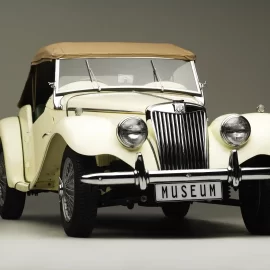
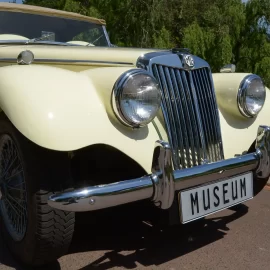
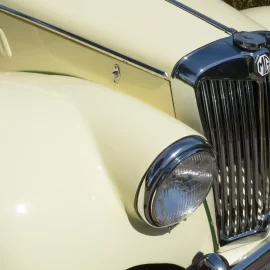
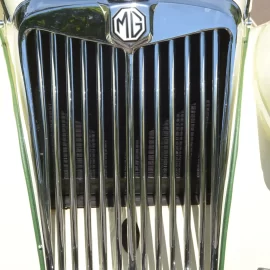
The MG T-Type is a series of body-on-frame open two-seater sports cars that were produced by MG from 1936 to 1955. Known as the Midget – a name originally given to the M-Type – the series included the TA, TB, TC, TD, and TF models. The TF was launched on 15 October 1953 and was effectively a facelifted TD fitted with the TD Mark II 1 250 cc engine but with headlights faired into the wings, a distinctive sloping radiator grille concealing a separate radiator, and a new pressurised cooling system along with a simulated external radiator cap. It was a transitional model, so radical changes were not to be expected but the revised styling was certainly a sideways step.
And what happened to the TE? The story goes that apart from the moniker sounding a little childish (tee-hee!), all internal production and parts codes at MG that featured the letter ‘E’ stood for Experimental. So the powers that be just skipped the letter to avoid internal confusion and external mockery…
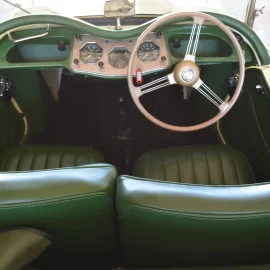
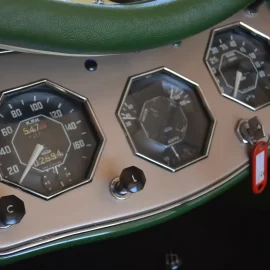
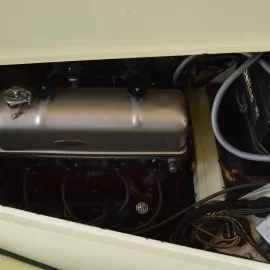
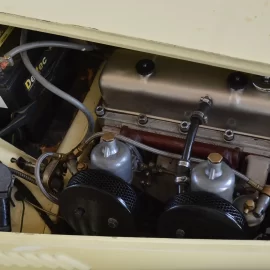
The TF’s XPAG engine’s compression ratio had been increased to 8,1:1 and extra-large valves with stronger valve springs and larger carburettors increased output to 43 kW at 5 500 r/min. Then in mid-1954, the engine capacity was increased by enlarging the bore to realise a 1 466 cc swept volume, and it was designated XPEG. Fed by twin-SU carburettors, the compression ratio was raised to help deliver 47 kW, still at 5 500 r/min, and a 17% increase in torque to 103 N.m at 3 000. The car was designated TF1500. Aside from the front end, MG also provided a brand new dash layout with three octagonal dials, one of which contained a fuel and a temperature gauge. Everything chassis-wise was identical to the TD.
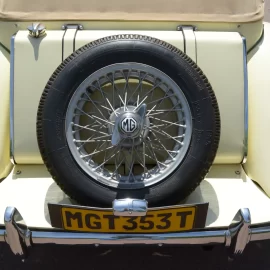
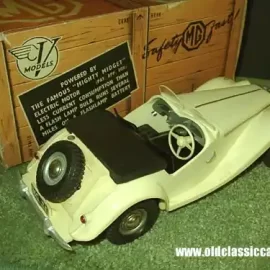
Back in the mid-1950s I was in my pre-teen years and already something of a car nut. My Dinky Toy collection was big, then one Christmas I received something extra special – a 1:18 scale (approx. 25 mm long) MG TF. But not just a push-along model, but an electric-powered example with batteries stored neatly under the seats, with the motor mechanism controlled via the spare wheel. It was produced by Victory Industries in the UK, and was made in moulded plastic with plated parts and metal fittings. Not only that, it featured working steering. It was released in several authentic period colours including Tartan Red, Ivory, Gloss Black and – as was my example – Cream. It was the pride of my toy collection and many hours were spent ‘driving’ it all around my home.
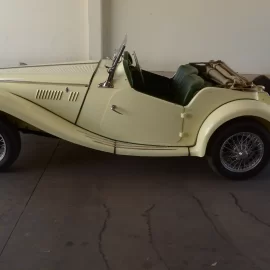
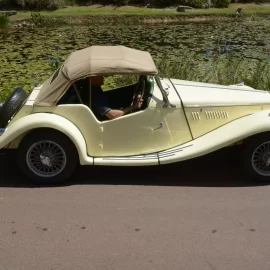
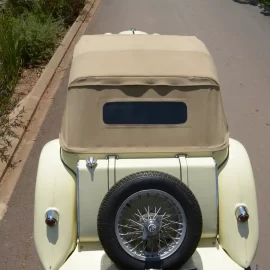
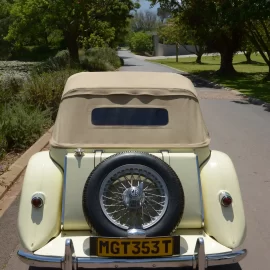
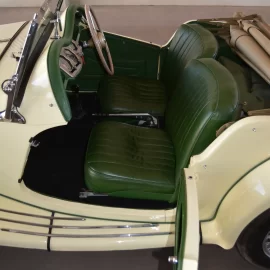
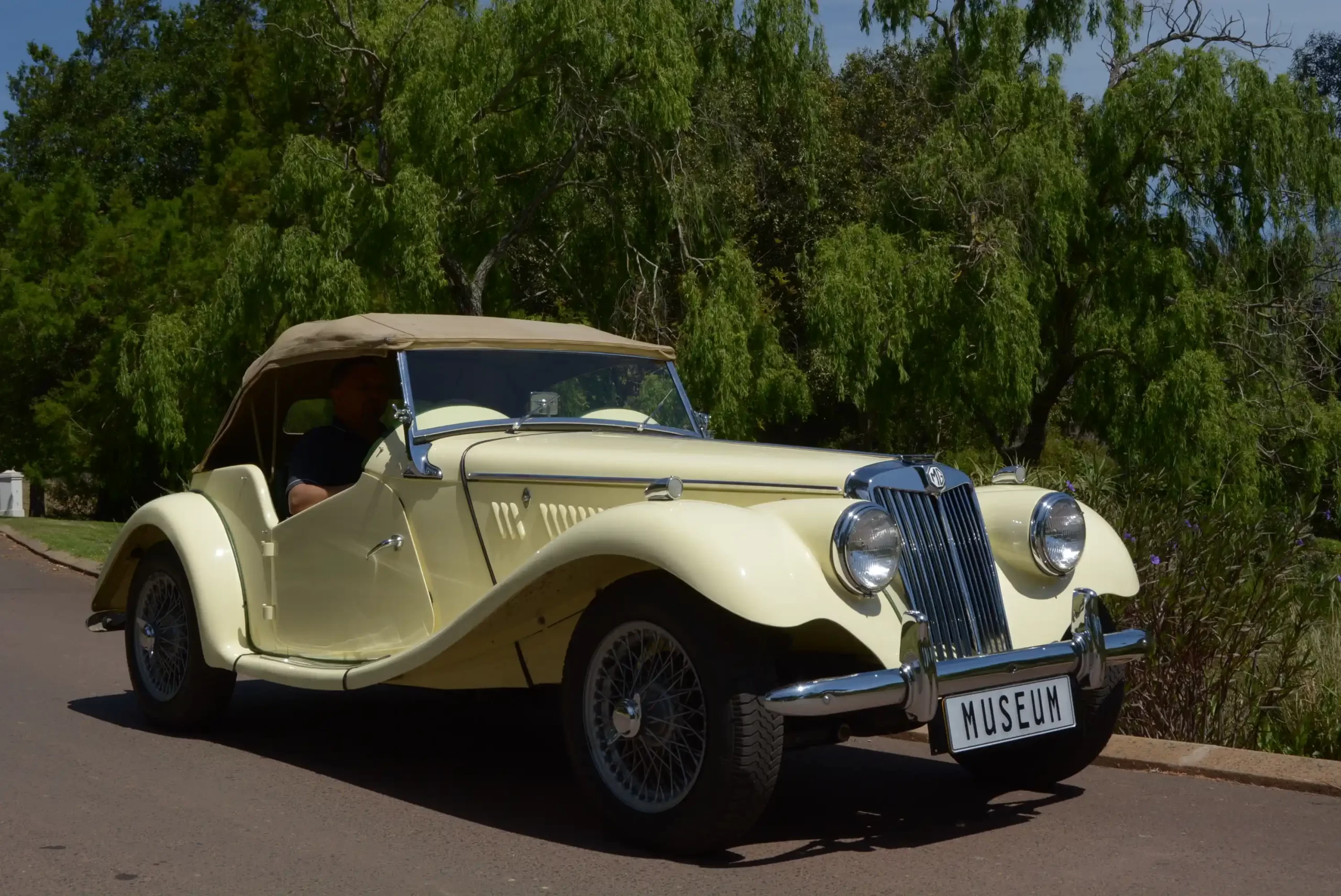
So, 70 years later, it was a nostalgic moment to finally get acquainted with a 1:1 scale petrol-powered version and, to cap it all, in the same colour as my Victory model! Alas, my hope of piloting the car around L’Ormarins were immediately, er, dashed when my 1,9-metre frame simply could not get behind the wheel, such was the cramped cockpit. So I had to make do with curling up in the passenger seat with knees up around my ears and shins pressed against the solid metal dashboard while workshop technician Donny Tarentaal acted as chauffeur.
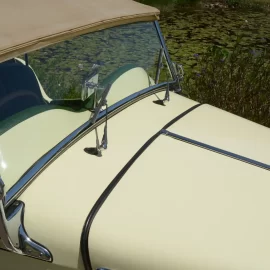
It soon became obvious why these T-Type MGs were so popular. With its classic British sports car looks, it fulfilled its promise of providing (in its day) affordable vintage motoring, a completely tactile driving experience while delivering surprisingly brisk performance. And by simply undoing two knobs at the top corners of the windscreen frame, the hood folds easily behind the seats and the windscreen can be folded flat to offer traditional ‘bugs in the teeth’ progress.
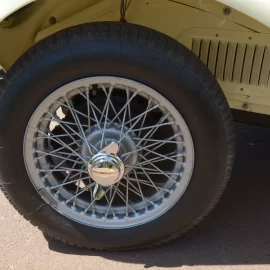
The TF sold into a market the TC had created and the TD had expanded, and by 1954 that market was overwhelmingly American. Although the T-Type was contemporary in the 1930s, it had grown outdated by the 1950s. Production ended on 4 April 1955 after 9 602 TFs had been manufactured, including two prototypes and 3 400 TF1500s. Interestingly, of the TF1500s that were built, only a few were sold in the UK, so right-hand-drive models are a rarity and for FMM to have an excellent RHD example in its collection is to be appreciated. The TF was superseded by the all-new MGA.
FMM’s 1954 TF1500 is currently on view in Hall D.