


05 Oct Fashionable Fintail
After the Ponton came the Fintail, Mercedes-Benz’s modest response to the American trend towards such adornments…
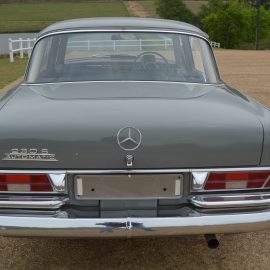
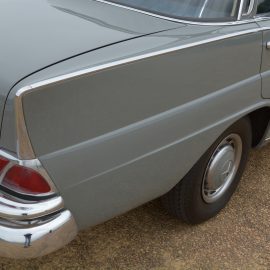
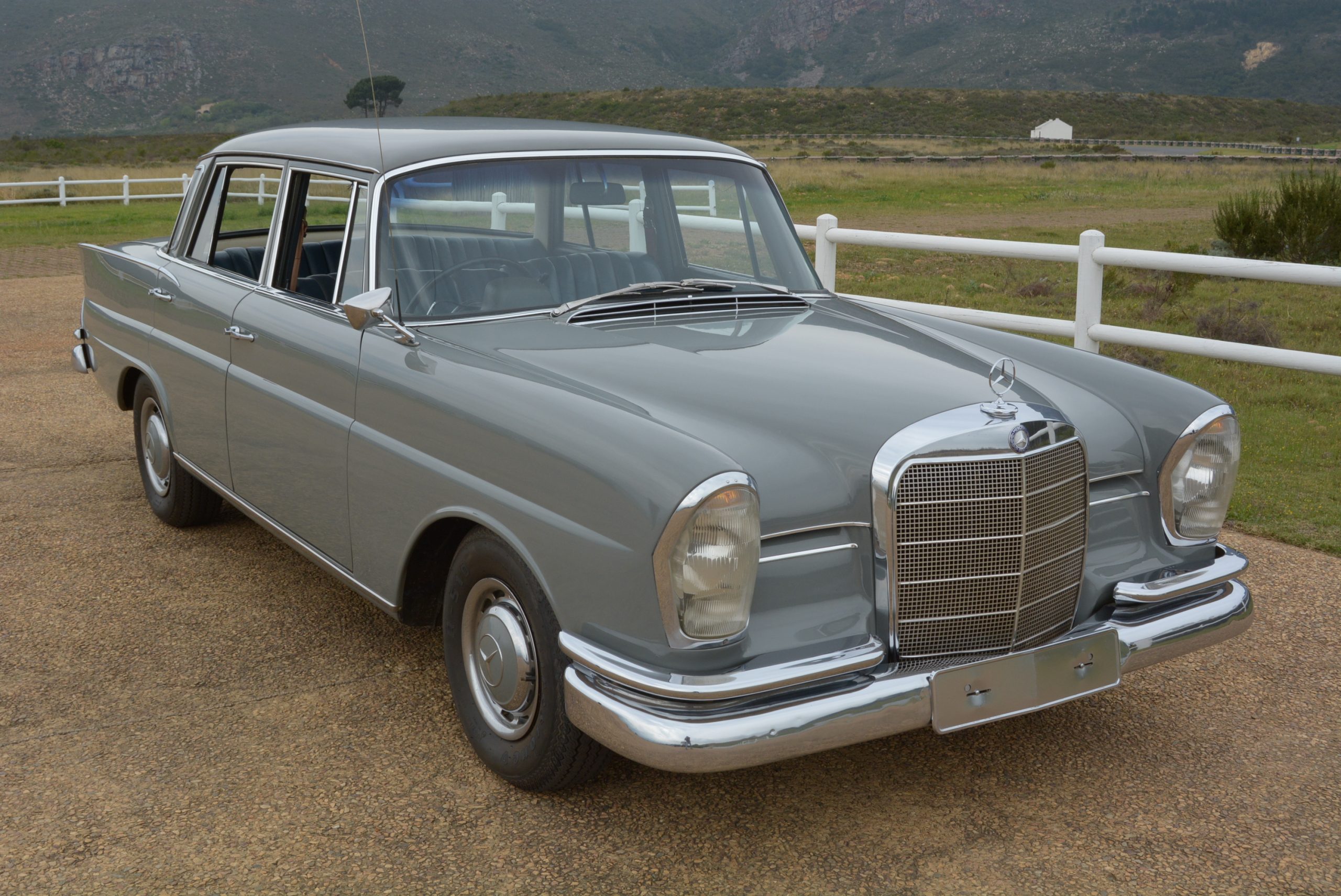
Post-war, the Mercedes-Benz Ponton (as reviewed in last month’s newsletter) established the company’s standing in the quality automobile marketplace. When the time came to introduce a replacement, M-B’s engineers came up with a more ‘boxy’ design that nevertheless gave a nod to fashion with rather subtle rear fender tailfins, a styling trend the likes of which once reached eye-popping proportions in the USA.
The Fintail (German: Heckflosse) became the nickname for the range of W110, W111 and W112 series of cars produced from 1959 to 1968. In Mercedes’ terminology, the short rear fins were designated Peilstege, which literally means ‘bearing bars’, an amalgam of peilen (‘take a bearing, find the direction’) and steg (‘bar’), in effect being parking aids which marked the corners of the car to aid reversing. All rather elaborate reasons for what, in reality, was an understated styling feature.
Although second in the M-B trio of code numbers for this model, the six-cylinder W111 derivatives were the first to be introduced in 1959, and the line-up comprised 220b, 220Sb, 220SEb and 230S. These were joined two years later with a family of four-cylinder models, namely 190c, 190Dc (1961–65), 200, 200D and 230 (1961–65). The W112 code was allocated to the single, six-cylinder 300SE that was manufactured from 1961-65.
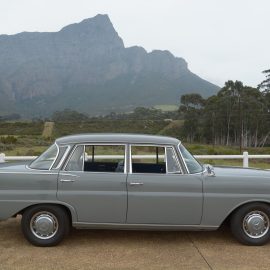
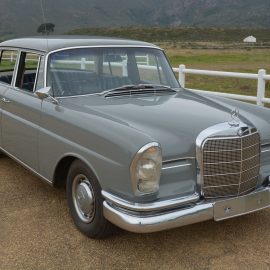
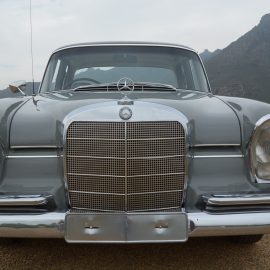
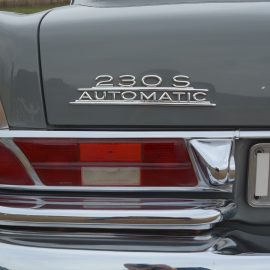
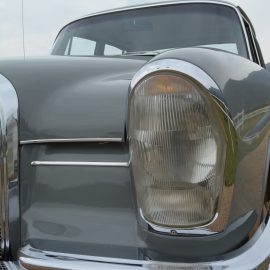
Within the FMM collection is an attractive 1965 230S automatic that proved to be something of a surprise. It is an understated design: apart from the vertical front light cowls, the fintails and the three-pointed star atop the very distinctive corporate grille, the 230S is a roomy, medium/large (4 877×1 796×1 498 mm) three-box saloon that provides satisfying motoring.
Effortless? Well, this car is an automatic (a manual version was also available) and, unlike today, 60 years ago European self-shifters were the exception rather than the norm and this car’s four-speed auto with a column shift was a novelty. SA’s leading motoring magazine CAR devoted almost half of its four-page road test to describing the transmission and its operation, such was the need to bring the motoring public up to speed, so to speak…
Under the bonnet lies a 2 306 cc inline-6 delivering 89 kW at 5 400 r/min. Fed by twin Zenith carbs, the 230S offered 0-96 km/h in 15,2 seconds and reached a top speed of around 165 km/h, which is sedate by modern standards but in reality the car feels quite spritely, accompanied by a pleasing exhaust tone. The servo-assisted front disc/rear drum brakes are well up to their task, operated by a standard-sized pedal rather than an enlarged one as is usually the case with automatics.
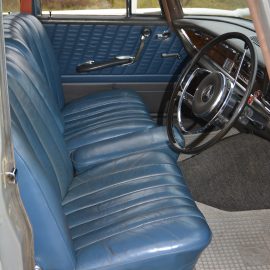
The 230S offered independent suspension front and rear, with conventional coil springs up front while at the rear was a more sophisticated swing-axle arrangement with hydropneumatic self-levelling to enhance ride comfort. In fact, comfort is the name of the game thanks to generous leather-upholstered seating offering seating for five.
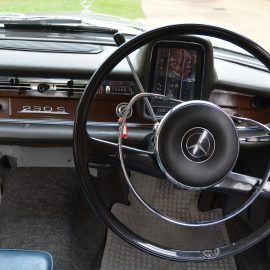
One aspect of the car that does seem odd is the instrumentation. The facia has the expected fashionable strip of wood across its width, but the tightly-packed instrument cluster is a rather strange vertical affair viewed through the elaborate horn-ringed steering wheel. The ribbon speedometer is not particularly practical, neither is the offset gear selection indicator strip. It’s a case of fashion and taste…
But put into context, this 230S adequately summed up what Mercedes-Benz was all about 60 years ago. Premium quality motoring, and yours for just R4 200! Those were the days…
The 230S is on display in Hall B as part of FMM’s celebration of 140 years of the automobile.