


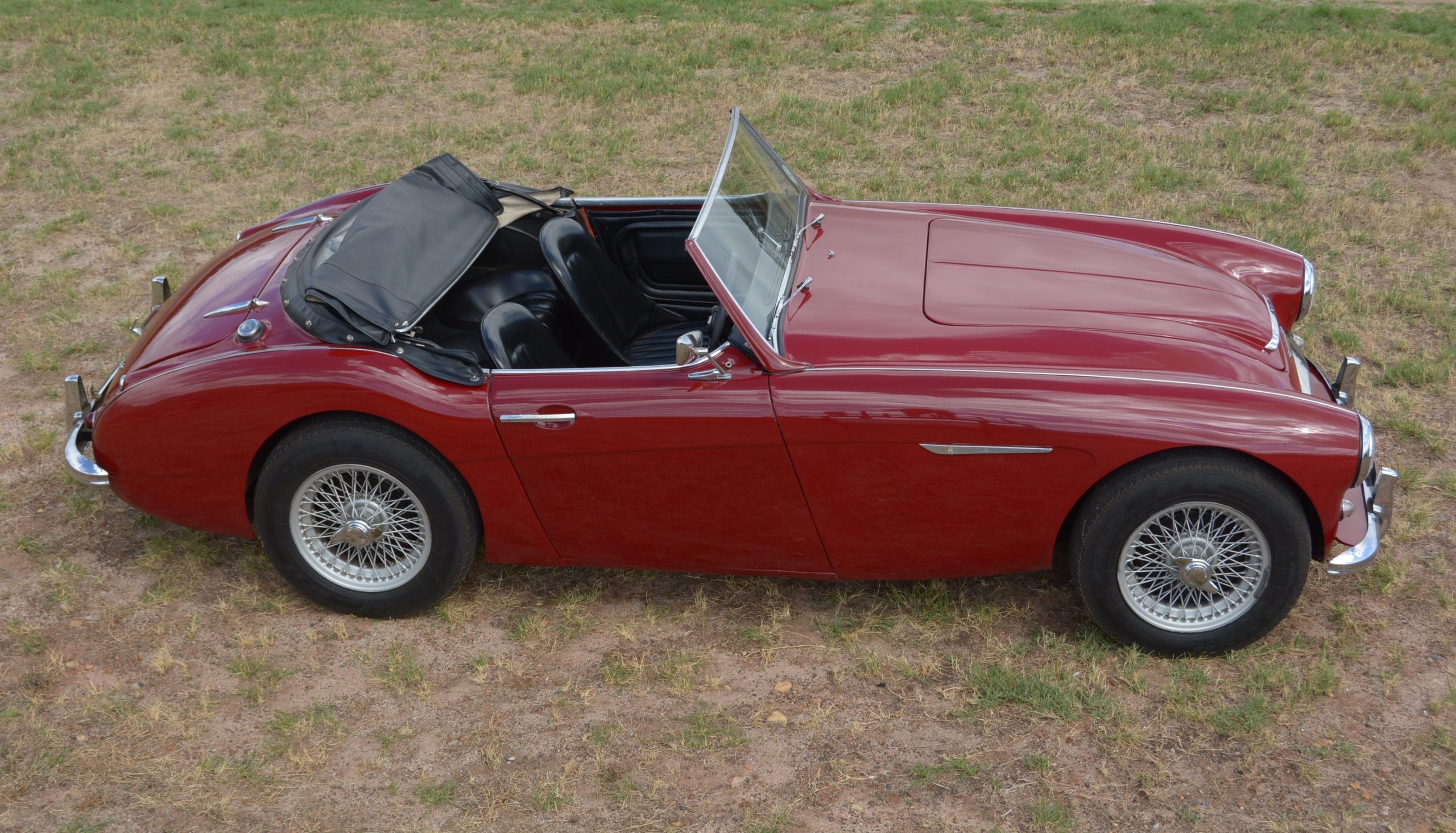
08 Apr Austin-Healey 100-6
Mike Monk recalls a childhood memory behind the wheel of one of Britain’s iconic sports cars of the Fifties…
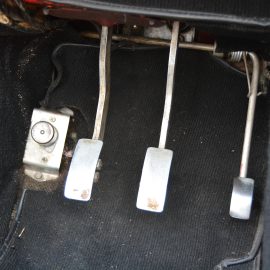
Being born into a UK family environment that had motoring in the genes, I still vividly remember as a child going to my first ‘motor show’ in October 1956, not at the nation’s annual international Earls Court, but one that was put on at the same time by a top motor dealership in my home town of Coventry, then the UK’s motor city. Amongst the new cars on display, one in particular attracted my schoolboy attention – a low-slung sports car. In far more relaxed times, no-one turned a hair when I opened the door, slid down into the seat and stretched my legs towards the pedals. I was eight years old and already tall for my age, but could not quite reach them, but I vowed one day to get to drive. The car? An Austin-Healey 100-6.
Introduced in September 1956, the 100-6 was a replacement for the four-cylinder 100 model that, in turn, was developed by Donald Healey from his Nash-Healey 2-door sports car. The chassis was designed by Barry Bilbie, and featured longitudinal members and cross-bracing that produced a comparatively stiff structure upon which to mount the body, innovatively welding the front bulkhead to the frame for additional strength. In order to keep the overall vehicle height low, the rear axle was underslung, the chassis frame passing under the rear axle assembly.
Styling was by Gerry Coker and Healey commissioned Tickford to build a body and the prototype, named Healey Hundred, appeared at the 1952 London Motor Show. The design impressed Leonard Lord, managing director of Austin, who was looking for a replacement for the unsuccessful A90. Lord struck a deal with Healey to build the car in quantity and it was renamed the Austin-Healey 100. The ‘100’ was named by Healey for the car’s ability to reach 100 mph (161 km/h).
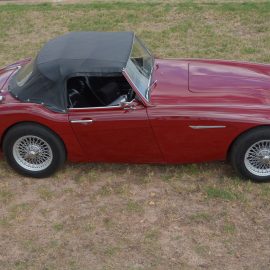
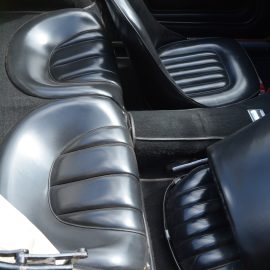
The 100 remained in production until 1956 when the 100-6 emerged with a 2-inch (50,8 mm) longer wheelbase – overall length increased as a result – and a more powerful straight-six engine in place of its predecessor’s inline-four, and added two occasional seats, which later became optional. Legendary Motor Sport editor Bill Boddy described occasional seats as being “seats for very occasional kids” – it was certainly not a definitive 2+2! The body’s lines were slightly streamlined, a smaller, wider radiator grille was adopted, the bonnet now boasted an air scoop, and the windscreen was now fixed.
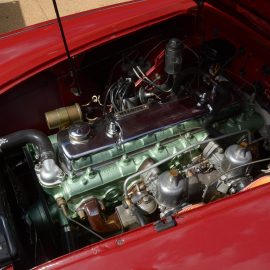
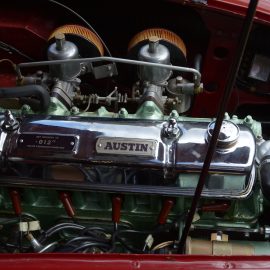
Designated by the factory as a BN4 model, it was powered by a tuned version of the cast-iron BMC C-Series 2 639 cc, inline-6, overhead-valve engine previously fitted to the Austin Westminster. Fitted with twin SU carburettors, it delivered 102 bhp (76 kW) at 4 600 r/min. In 1957, revisions to the manifold and cylinder head increased output to 117 bhp (87 kW) at 5 000 r/min. In this guise, dubbed BN6, the UK’s The Motor magazine road test recorded a top speed of 103,9 mph (167,2 km/h) and a 0-60 mph (97 km/h) sprint time of 10,7 seconds. Fuel consumption was given to be 13,6 l/100 km. This model was designated BN6, and amongst a few other changes, the previously standard overdrive unit was made optional, and the +2 seats were discontinued to increase covered luggage space. Also that year, production was moved from the Austin plant in Longbridge to the MG plant in Abingdon.
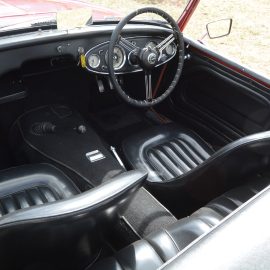
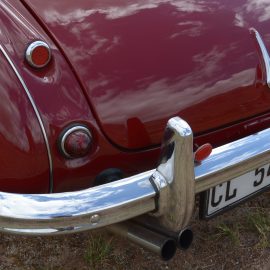
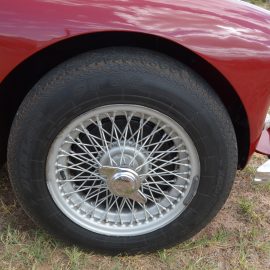
Fast forward seven decades and my childhood vow became a reality. Included in the FMM collection is a 1956 Austin-Healey 100/6 that is still in excellent condition. Stepping into the car was not as easy as in my youth: the car is low, the door opening is small and with the hood erect it takes some juggling to settle into the flat-on-the-floor bucket seat. But this time the pedals were in easy reach, so after firing up the rorty six-pot it was A for Away – and it did not disappoint. The engine is really torquey and performance is certainly sporty, the gearshift proving to be neat and precise. Despite the big, three-sprung-spoked wheel, the steering is heavy and the rake of the windscreen is such that knuckles occasionally brush the glass when carrying out tight turns. The ride is naturally firm, but it all adds to the driving experience.
After battling a bit to fold the hood, I discovered that the windscreen, in fact, does a good job of sending air over the cockpit, so there were no ‘bugs in the teeth’ to contend with. But it did increase the volume and effect that the engine delivers, adding to the thrill of the drive. And that is essentially what 1950s sports car motoring was all about, and the Austin-Healey certainly played its part. A total of 14 436 100-6s were built from 1956 to 1959, and I’ve now managed to fulfil a promise to myself behind the wheel of FMM’s example, which is currently on display in Hall C.