


27 Feb A FOR AWAY
In the midst of a local revival of the MG brand in SA, Mike Monk describes and drives one of the models that established the company’s sporty reputation 70 years ago…
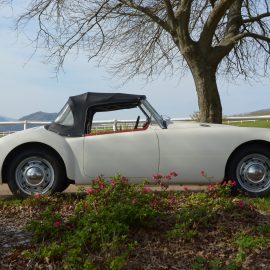
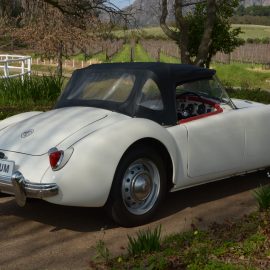
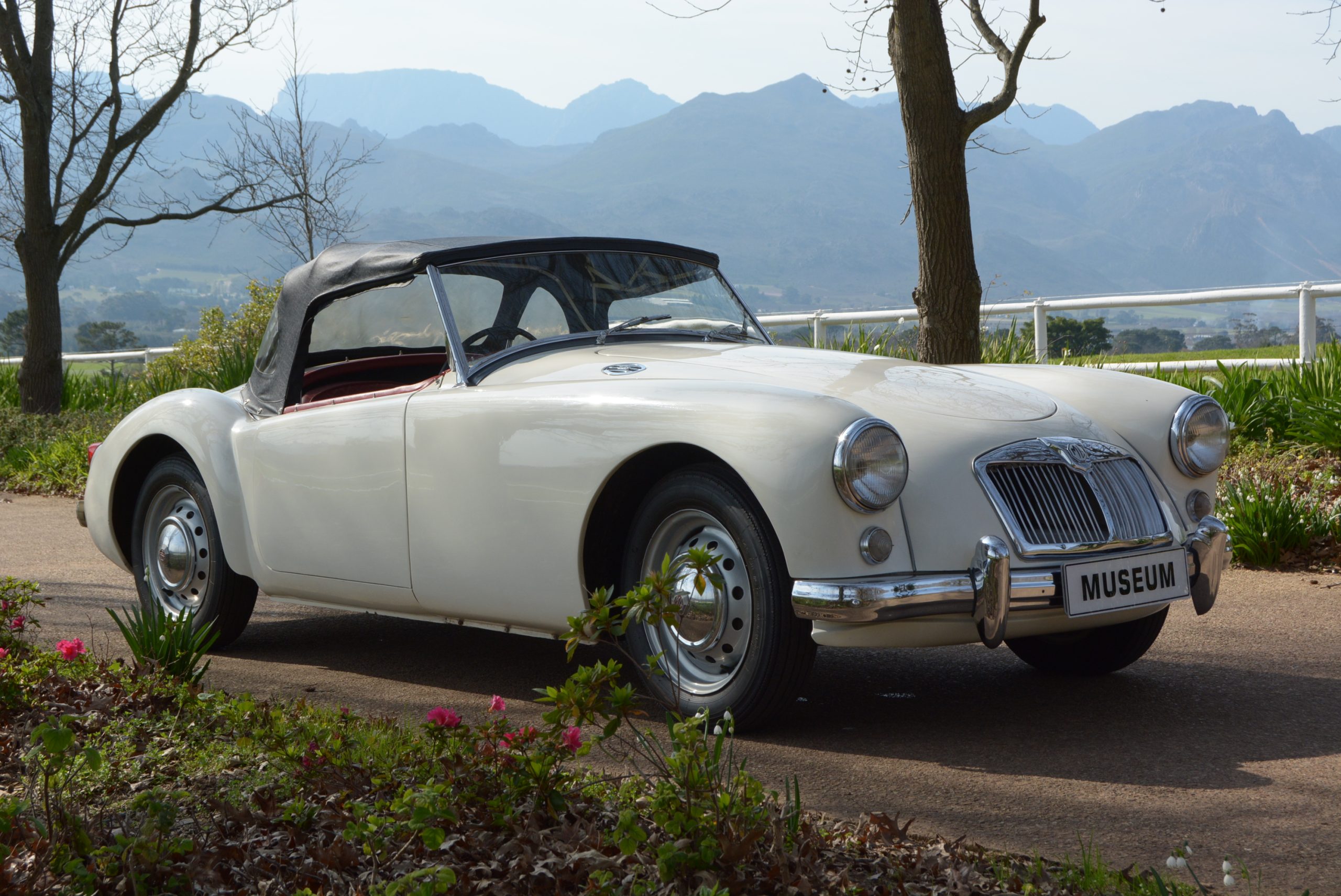
Without doubt, in the pre- and post-WWII years MG cars were the backbone of motor sport in many parts of the world, not least in Southern Africa. Small, light, nimble quick – and cheap – in those days handicap racing was the order of the day so MGs were able to contest for top honours no matter what they were up against. Almost every sprint, hillclimb, circuit and track race would see MGs on the entry list, the cars driven to and from the event with similar gusto. In the late-1940s and early 1950s it was the TC, TD and TF models that were being offered, but sales were falling, and when BMC chairman Leonard Lord rejected a replacement prototype just after signing a deal with Donald Healey to produce the Austin-Healey, something had to be done. Enter the A, and the old-fashioned look of the T series cars gave way to a sleek, all-enveloping body shape that was an instant hit.
The A was designed by Syd Enever, and its development began in 1951 when the basic shape was created for privateer George Philips’ 1952 EX172 Le Mans entry, which was based on a modified TD chassis. Two new cars were built, one used for testing and the other, much modified version, taken to Bonneville Salt Flats for some speed trials. Further variations on the theme were created before Enever’s design was revived following Lord’s alliance with Healey.
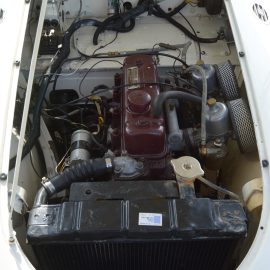
The all-new box-section chassis featured wishbone/coil spring independent front suspension with semi-elliptic springs at the rear supporting a solid axle. Lever-arm dampers were used all round. Steering was by rack and pinion and Lockheed drum brakes were fitted. Road wheels were 15-inch bolt-on steel with wire-spokes as an option. Completing the transformation, rather than using the long-standing Morris-based XPAG engine, MG adopted BMC’s more modern overhead-valve B-Series motor already used in the MG Magnette saloon, and it was mated with a four-speed gearbox.
Three prototypes, called EX182, were built for the ill-fated 1955 Le Mans to coincide with the car’s launch, but body build problems caused a delay in production so the public introduction only took place three months later, on September 26 at the Frankfurt Motor Show. Originally coded the UA Series, because the car was so different and represented a fresh start, it was dubbed A, and advertised as “The First of a New Line”. The two-seater roadster was an instant hit. Initially, the 1 489 cc four-cylinder engine produced 51 kW but it was soon uprated to 54 kW at 5 500 r/min with 104 N.m of torque at 3 500. An early UK The Motor road test realised a top speed of 157 km/h, a 0-60 mph (96 km/h) time of 16 seconds, and a fuel consumption of 10,6 litres/100 km.
A coupé version was introduced in 1956 and then in 1958 an exciting twin overhead-cam version was produced that, sadly, failed to live up to expectations. In May 1959 the engine size was increased to 1 588 cc and power upped to 58 kW at 4 800 r/min with torque raised to 118 N.m at 3 800.
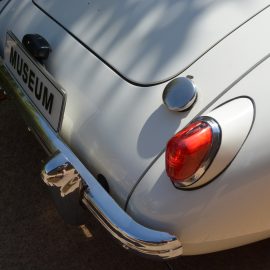
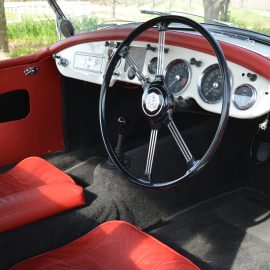
FMM’s white 1958 A roadster proved to be an entertaining drive. The 1,5-litre BMC B-Series engine is a period classic, delivering all the right noises and the kind of effortless performance that many sports cars of the time delivered. The short shift lever falls easy to hand – synchromesh on the top three ratios – and quickly gets the torquey motor into top gear, which proves to be really flexible enough to propel this 900 kg sportster along the back roads with an easy, sporty gait. The big steering wheel – with its stylish quartet of sprung spokes – is comfortably weighted and provided accurate steering control. The seats are reasonably comfy, as is the ride quality. Overall, I was impressed.
The A even appealed to The King of Rock ’n Roll. Elvis Presley had a Mk.1 1600 roadster in the 1961 movie Blue Hawaii, and afterwards bought the car. Also on the big screen, Magnum PI’s Tom Selleck drove a similar car in Daughters of Satan, released in 1972. Michael Sheen drove a 1958 A in the TV series Masters of Sex.
While the T series are rightfully held in high esteem, it was the A that kick-started MG’s reputation after the war and 101 081 were reportedly sold before production ceased in July 1962, apparently with less than 6 000 sold in its UK home market. It was replaced with the B, itself a major success story, but the effect that the A had on the global sports car market should never be overlooked. A for Away indeed!