


30 Jun An International Saviour
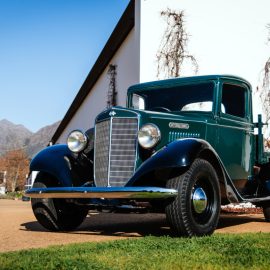
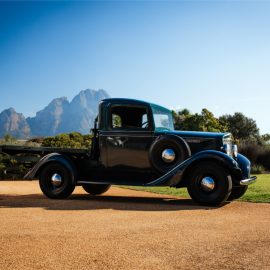
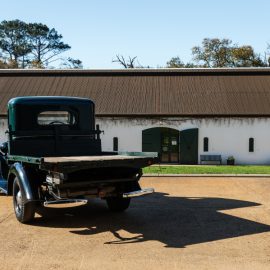
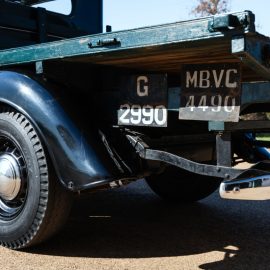
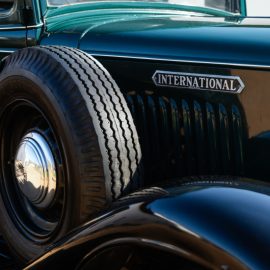
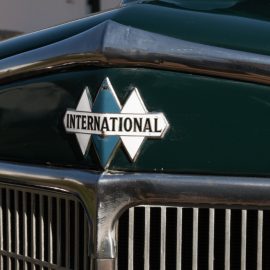
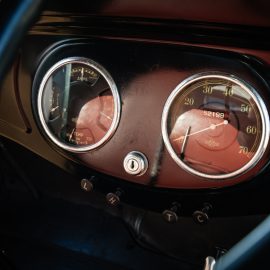
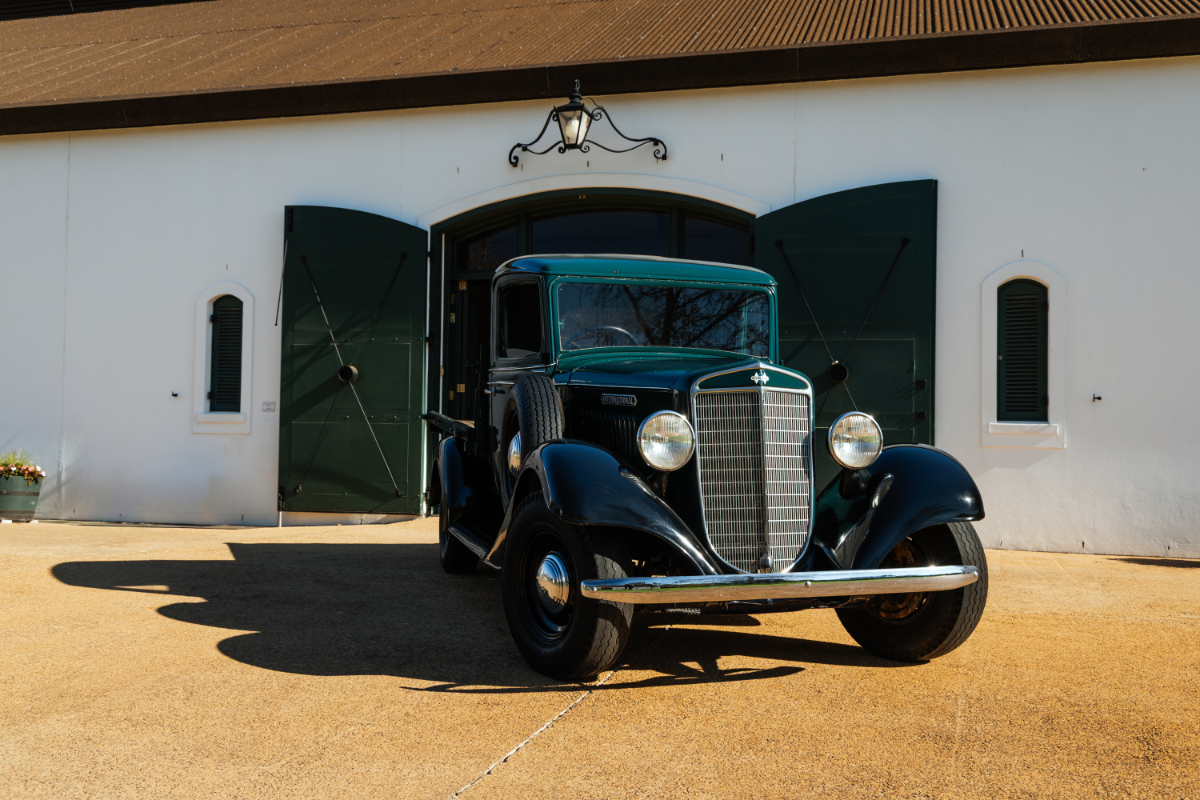
One of the more attractive post-vintage pick-ups in the FMM collection in the 1936 International C1 Flatbed. Mike Monk describes the background to a vehicle that helped save International’s existence…
International Harvester started producing light trucks as early as 1907 and their Auto Wagon is reputed to be the forerunner to the pick-up truck of today. The Great Depression in the 1930s were not good years for any motor manufacturer and for International it was no different. The solution to the crisis came in the form of the C-line range of trucks and pick-ups. However, their life span was short lived, lasting only ran from 1934 to April 1937 but during that time, annual production rose from 17 400 units to 76 820 before the range was replaced with the D-2 Series. Over time, the C-line was available in 28 different model types.
Following a period of operating jointly with Willys-Overland, when this company went into receivership, International took the decision to go it alone and enter the light duty commercial vehicle market. The C-line was the result. Based off an existing Willys design, the all-steel cab styling was altered, a windscreen visor was done away with, a V-shaped grille with a body-coloured shell was adopted along with more stylish fenders. Manufacture took place at the IH plants in Springfield, Ohio and Chatham, Ontario, Canada.
Power came from a ‘Green Diamond’ inline-6, L-head engine developing 58 kW at 3 400 r/min. It boasted a cast-iron block, a four-bearing crankshaft, solid lifters and a single-throat downdraught carburettor. Compression ratio was a modest 6,3:1. The engines were manufactured by the Wilson Foundry & Machine Co of Pontiac, Michigan. Transmission was a three-speed manual gearbox with a floor-mounted lever. Other mechanical changes included the adoption of roller-bearing joints for the propshaft, stronger steering and brake components, stronger springs with redesigned shackles and deeper chassis side rails.
The 1934 price for a short-wheelbase pick-up was $545, which was $100 less than a bare chassis. The long-wheelbase chassis cost $25 more. Throughout its short life span very few changes were made to the C-1’s specification but hydraulic drum brakes on all four wheels were introduced in February 1936.
FMM’s 1936 International C-1 Flatbed half-tonner is currently on View in Hall B.