


30 Jun The start of a big Three Player
There was a period when America boasted a ‘Big Three’ of motor manufacturers – Ford, General Motors and Chrysler. That’s not the case today, but just over a century ago one of those early giants – Chrysler – came into being. Mike Monk describes a model that helped lay the company’s foundations…
The Chrysler company was founded by Walter P Chrysler on 6 June 1925 when the ailing Maxwell-Chalmers Corporation (est. 1904) was re-organised into the Chrysler Corporation. The company’s headquarters were in Highland Park, Detroit, USA. Chrysler had arrived at the ailing Maxwell-Chalmers company in the early 1920s to overhaul the company’s troubled operations after a similar rescue job at Willys-Overland. In late-1923, production of the Chalmers automobile was ended and the the first Chrysler car – the Chrysler Six – was introduced on 5 January 1924 at the New York Automobile Show.
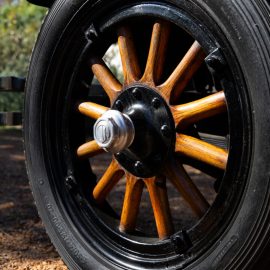
The Chrysler Six was designed to provide customers with an advanced, well-engineered car, at an affordable price. Elements of this car are traceable to a prototype that had been under development at Willys during Chrysler’s tenure. The 1924 Six boasted a high-compression six-cylinder L-head engine featuring a seven-bearing crankshaft, carburettor air filter, full pressure lubrication and an oil filter, elements absent from most autos at the time. Among other innovations in its early years were the first practical mass-produced four-wheel hydraulic brakes, a system nearly completely engineered by Chrysler with patents assigned to Lockheed, and rubber engine mounts, called ‘Floating Power’, to reduce vibration. Features like this had never been offered in a medium-priced car before, and the first-year record sales of 32 000 proved the popularity of this model. Chrysler also developed a steel disc wheel with a ridged rim, designed to keep a deflated tire from flying off the wheel. This wheel design was eventually adopted by the auto industry worldwide.
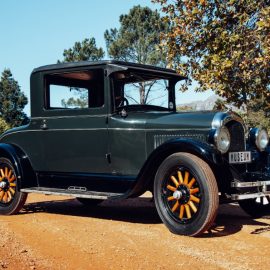
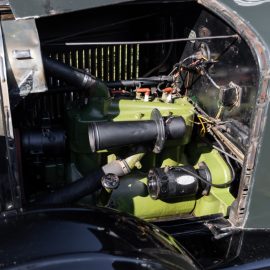
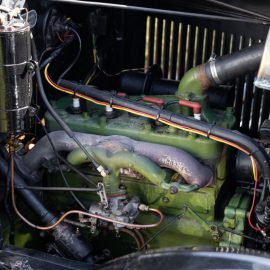
The Maxwell brand was dropped after the 1925 model year, with a new, lower-priced, four-cylinder range of Chryslers – in reality badge-engineered Maxwells – introduced for the 1926MY. This F-58 featured styling similar to its larger six-cylinder siblings (the G-70 and E-80) and rested on a 109-inch (2 768 mm) wheelbase chassis. The L-head in-line four-cylinder engine displaced 185,8 ci (3 045 cc), had a cast iron block, solid valve lifters, a Stewart carburettor and developed 38 hp (28 kW) at 2 200 r/min. It was mated with a three-speed manual gearbox. Mechanical rear-wheel brakes – as fitted to FMM’s 1926 example – provided the stopping power to the early F-58 models but were soon replaced by hydraulic brakes.
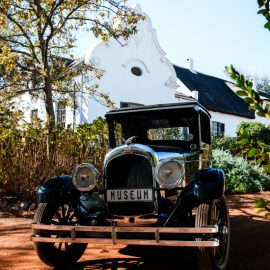
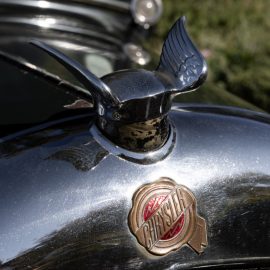
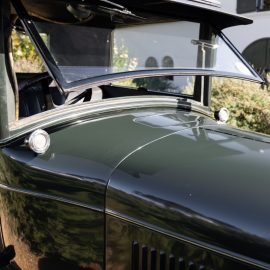
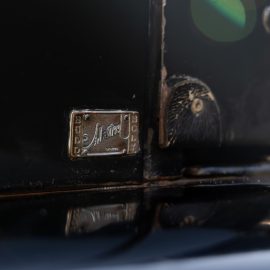
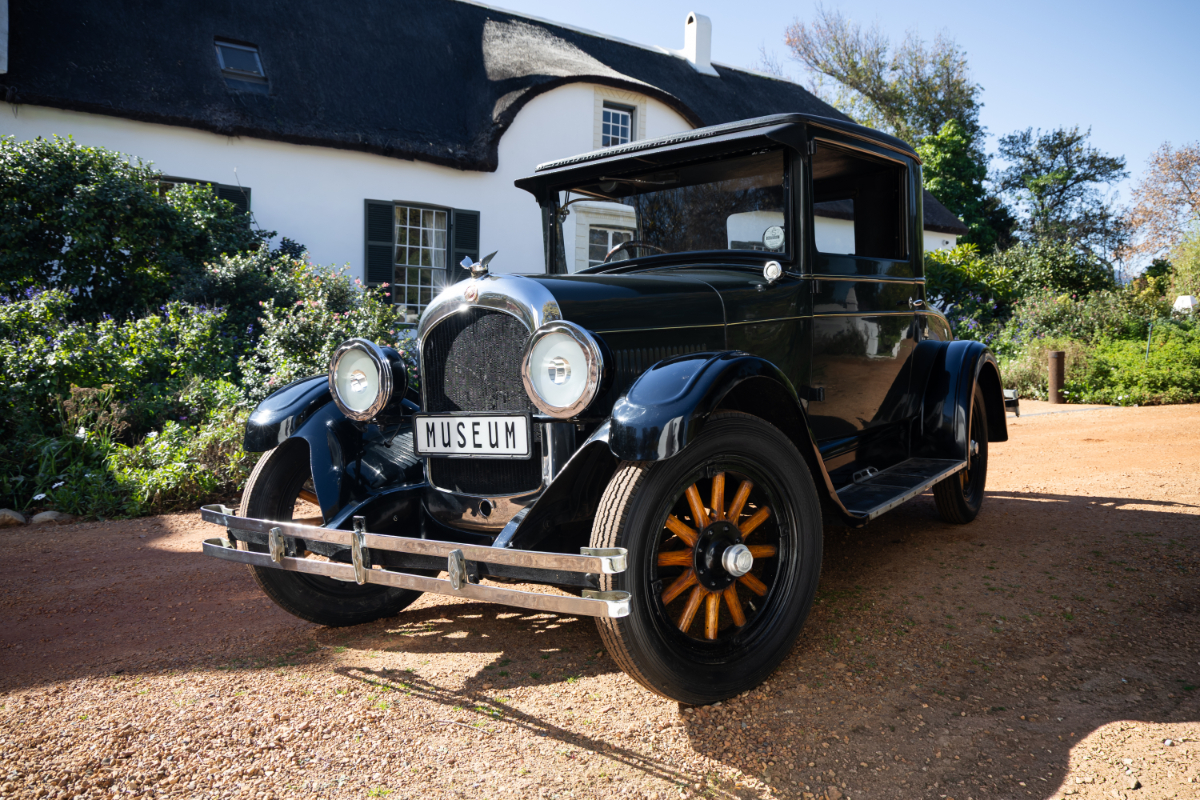
The F-58 name was in reference to its effortless cruising speed of 58 mph (93,3 km/h). Priced from $890 to $1 095, Chrysler’s advertising material of the era boasted that the four-cylinder, five-passenger convertible “offered three qualities combined in no other car – 58 miles-per-hour, 2 to 25 mph in 8 seconds, and 25 miles to the (US) gallon”. Five body styles were on offer: 2-dr Roadster, 2-dr Coupé, 2-dr Coach, 4-dr Tourer and 4-dr Sedan. The all-steel bodies were built by Budd Manufacturing of Philadelphia. Unique styling elements included the winged Viking hood ornament and a thin, rounded radiator shear. The closed-bodied cars had ‘cadet’ type visors and a one-piece windshield whereas open-bodied cars had a two-piece, swing-out design.
Approximately 81 089 examples of the F-58 were produced for the 1926 model year,
Although sales were strong for the four-cylinder line, they did not wear the Chrysler name for very long. After 1928, the four-cylinder models wore the Plymouth nameplate – Chrysler-Plymouth in its debut year.
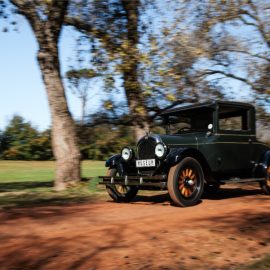
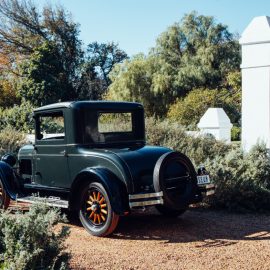
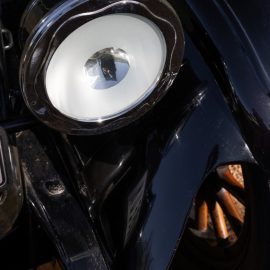
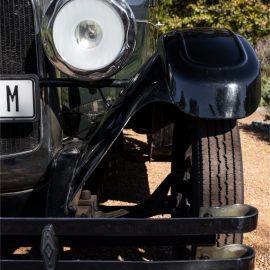
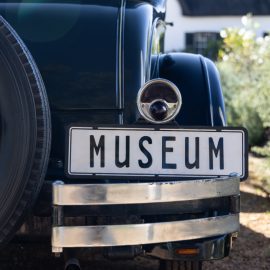
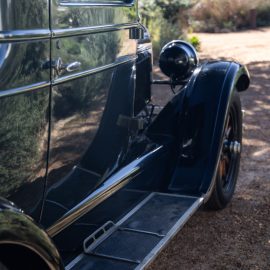
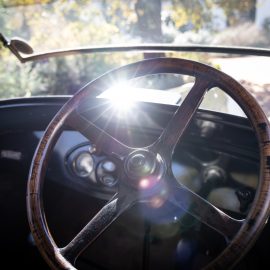
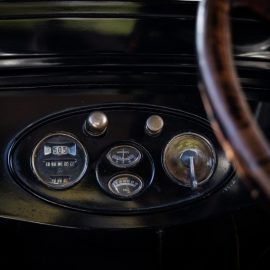
FMM’s 1926 Chrysler F58 Four is currently on display in Hall B.