


06 Nov Gran Turismo Veloce
Mike Monk revives fond memories of a classic Alfa…
I am sure I am not alone in thinking that Alfa Romeo is a name that deserves to be up there with the best of today’s premium brands. Over the past 115 years, Alfa has produced some truly memorable road and race cars and after a nostalgic drive at the wheel of one of its greatest models – the Bertone-styled GTV – it is easy to understand the passion of enthusiasts of the brand – the alfisti.
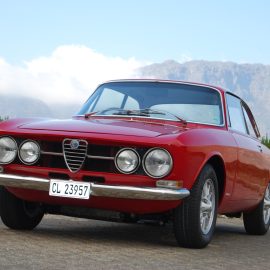
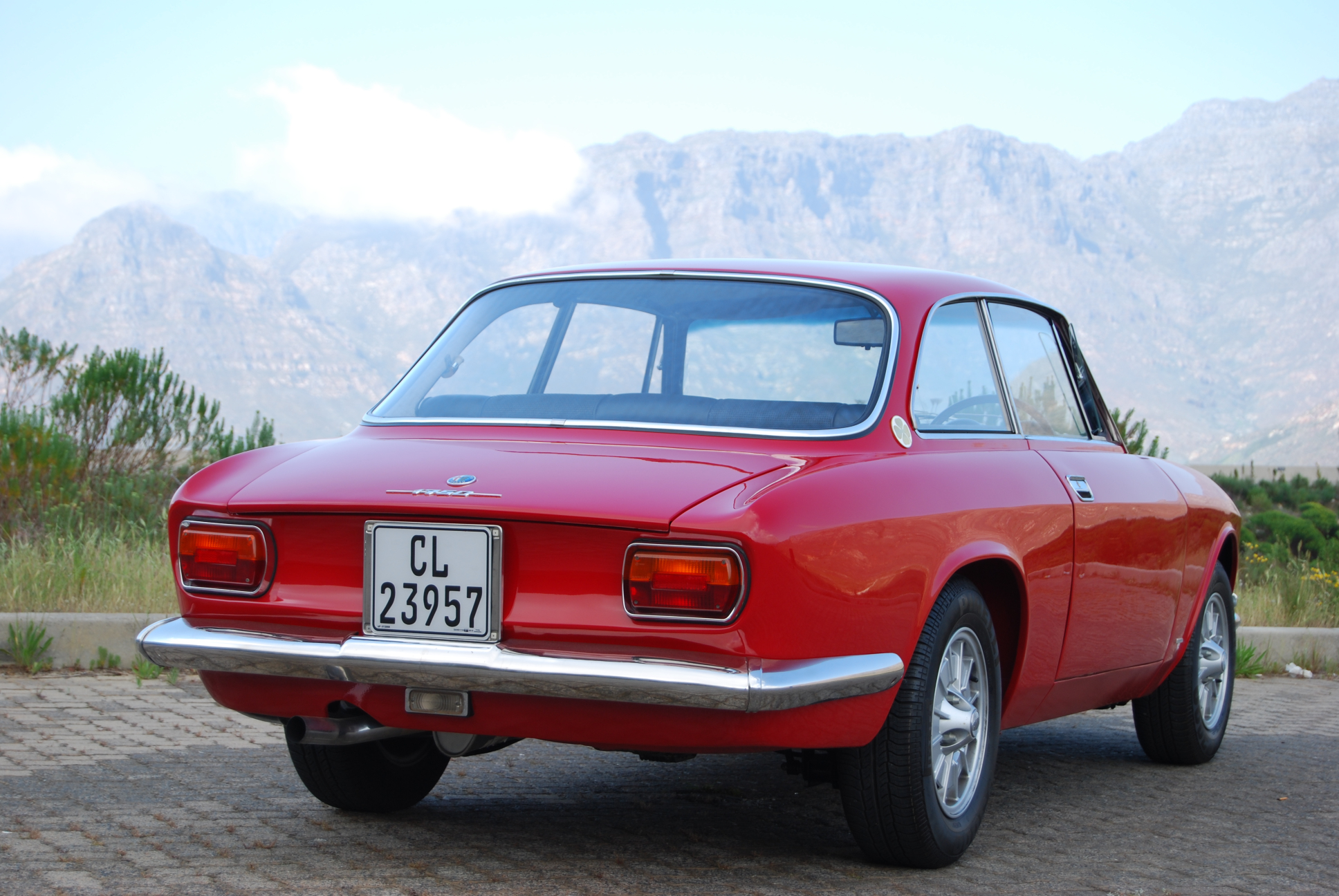
Just walking up to the coupé stirs the juices. Resplendent in traditional Alfa rosso paintwork, the car, which was actually designed by 24-year-old Giorgetto Giugiaro during his brief stint at Bertone, oozes style, character, sportiness with a delicacy of line that Italian designs are famous for. Not a sign of excess anywhere – slim, trim and simply begging to be caressed and mastered.
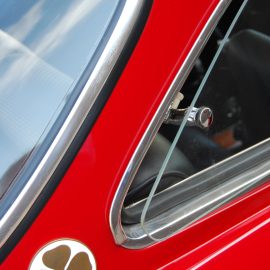
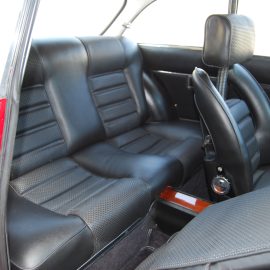
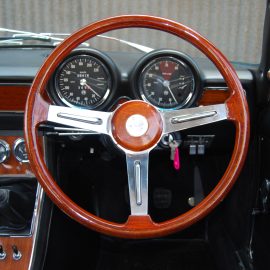
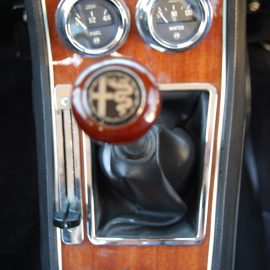
Opening the door with its frame-less drop glass but period quarter light that is operated, unusually, by a turning knob rather than moving a latch, and drop into the stylish but hardly generous-sized leather seat and take in the surroundings. The thin, wood-rimmed steering wheel with each of its aluminium spokes housing a short horn-push bar. The spindly column stalks. The classic dual-cowled instruments protruding from the wood-veneered dash and ideally set just below driver’s direct line of sight. The gear lever, protruding almost horizontally from the centre console and less than a palm width away. The trio of toggle switches and extra gauges in the hangdown. The pedals: slender accelerator hanging down and brake and clutch hinged under floor, ideal for heeling-and-toeing. And the ‘clap hands’ wipers parked at the base of the screen. My memories of GTV ownership back in the 1970s came flooding back, the then commonplace Italianate driving position – long arms short legs – at odds with my 1,9-metre long legged frame. But I am not complaining…
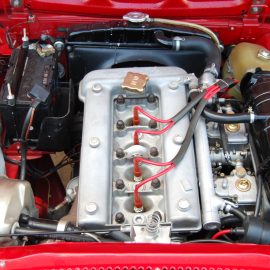
The period choke and hand throttle levers, an odd Alfa quirk of the time, were ignored as the in-the-know ‘pump the throttle twice then twist the key’ starting procedure was employed, and the pair of twin-choke Webers fed in the mixture. The snuffly, wuffly, slightly lumpy idle of that wonderful Alfa twin-cam is instantly recognisable and a blip on the throttle clears its throats heralding a fun drive…
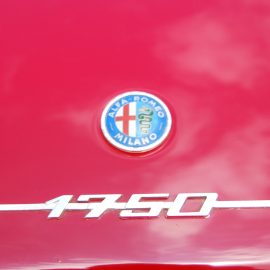
Born in 1963 and based on Alfa’s Type 105 floorpan – which underpinned all the Giulia models – the coupé was originally known as a Sprint GT. The V for veloce was added with the introduction at the 1968 Brussels Motor Show of the 1750 motor, which offered 98 kW at 5 500 r/min and 186 N.m of torque at 2 900. Of all the GT road cars – 1300, 1600, 1750 and 2000 – the 1750 is the pick of the bunch by virtue of having a near-perfect balance of power, torque and drivability. The 1300 and 1600 do not offer the 1750’s performance and the 2000 is a bit less fluid in its delivery of admittedly slightly better performance.
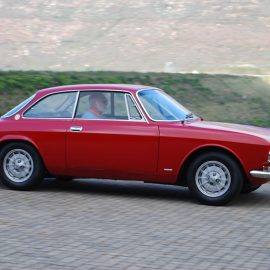
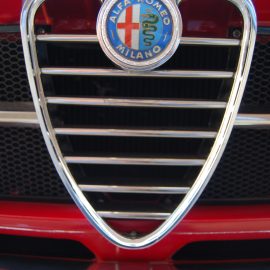
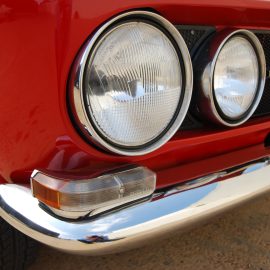
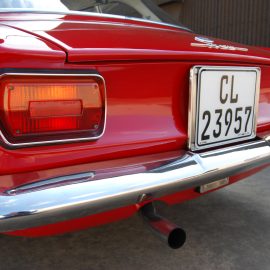
Out on the open road the GTV breezed along. FMM’s car is a five-owner 1969 model – the first year the model was sold in South Africa – distinguished as a first series by its front park/indicator light units mounted atop of the bumper, and the narrow, chrome surround grille. The initial step-nose bonnet had given way to a flush-fitting but still front-hinged item, and different-sized dual headlights were also a new feature. The generous glasshouse and slender pillars provide a near 180-degree panorama, but it is looking down over the bonnet flanked by the subtle ridges of the front fenders that stirs the soul even more.
The engine pulls cleanly from as little as 1 500 r/min to the red line at 6 200. Alfa Romeos had five-speed transmissions as standard well before it became a trend, and the ’box is a delight to use, so close to hand and with a well-specified spread of ratios. Thanks to the offset (to the right) of the pedals, there is plenty of room to rest the left foot when cruising: the footwell houses the foot-operated screen washer.
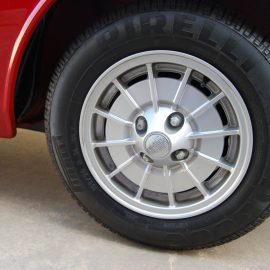
The unassisted steering is never heavy and always accurate, and this is part of what the GTV is all about. The suspension comprises double wishbones and coil springs up front, while at the back the live axle is located by trailing arms, an upper A-bracket and coil springs. Anti-roll bars are fitted at both ends. The result: one of the best handling cars of its day – and no less effective today. It is a sheer joy to drive, communicating to the driver through hands, backside and feet, and just so predictable and entertaining in a sporty manner befitting its looks. While not a tar burner – 0 to 60 mph (96 km/h) in 9,3 seconds – the car’s superbly-balanced ride and handling more than make up for any outright performance shortcomings it may be seen to have. Rolling on unusual but authentic optional Cromodora alloy rims shod with Pirelli rubber, the GTV has plenty of grip and thanks to boosted all-disc brakes, stopped well, too.
The Alfa Romeo GTV is an amalgam of delicacy and vigour that epitomises Italian sports cars of the period, but the 1750 carries it off with just a hint more passion – cuore sportivo – that is simply irresistible. Check out FMM’s Gran Turismo Veloce that is currently on display in Hall B.
Bellissimo!