


06 Nov Caracal: Save our Wild Cat
Mike Monk gets to grips with a rare animal. Almost…
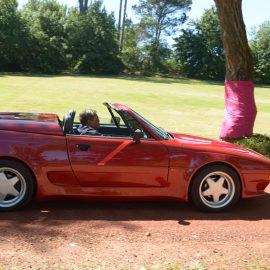
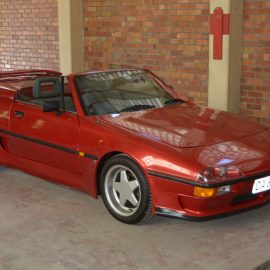
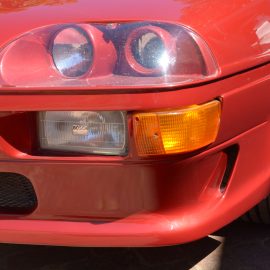
Rather like dipping your hand into Pandora’s Box, every time you delve into South African motoring history, something exciting pops out. Over the years SA has produced some interesting home-brewed sports cars, not all of which hit the headlines. One such example is the Caracal, a sporty animal that could be said to have appeared in the wrong place at the right time.
The Caracal was created with the highest credentials, but was destined to be a non-starter. It was conceived in the late-1980s by Intermotormakers, a Cape Town company established in the mid-1970s to assemble Lamborghinis and Lotuses, a scheme cut short when the Government withdrew an exemption clause from the industry’s then Local Content Programme. The company then went back to industrial design, and a plan to build a local sports car came to fruition.
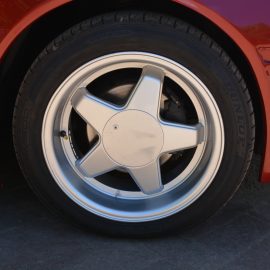
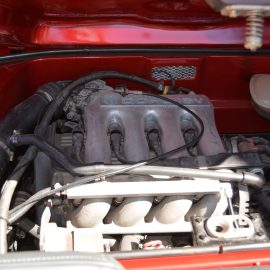
Gerrie Steenkamp was the driving force behind the car’s design and overall development. Local rally driver Nic de Waal was responsible for most of the engineering work, which utilised a mid-mounted VW Golf Mk.2 GTi 16V powertrain subframe along with other Golf hardware and a number of fabricated suspension components. The glass fibre body was laminated to a subframe that was rubber mounted to the chassis to reduce NVH. The car was named Caracal after a wild cat native to Africa, Central Asia, Southwest Asia and India.
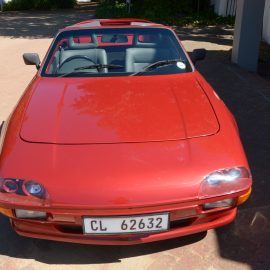
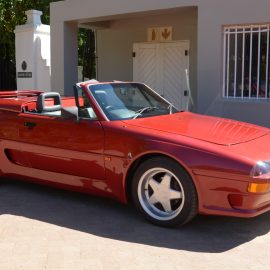
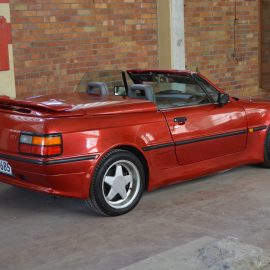
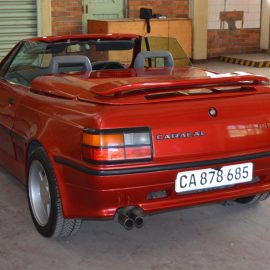
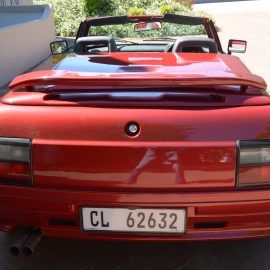
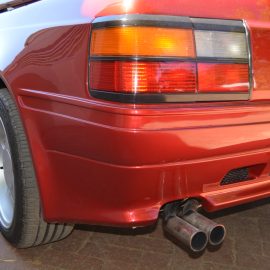
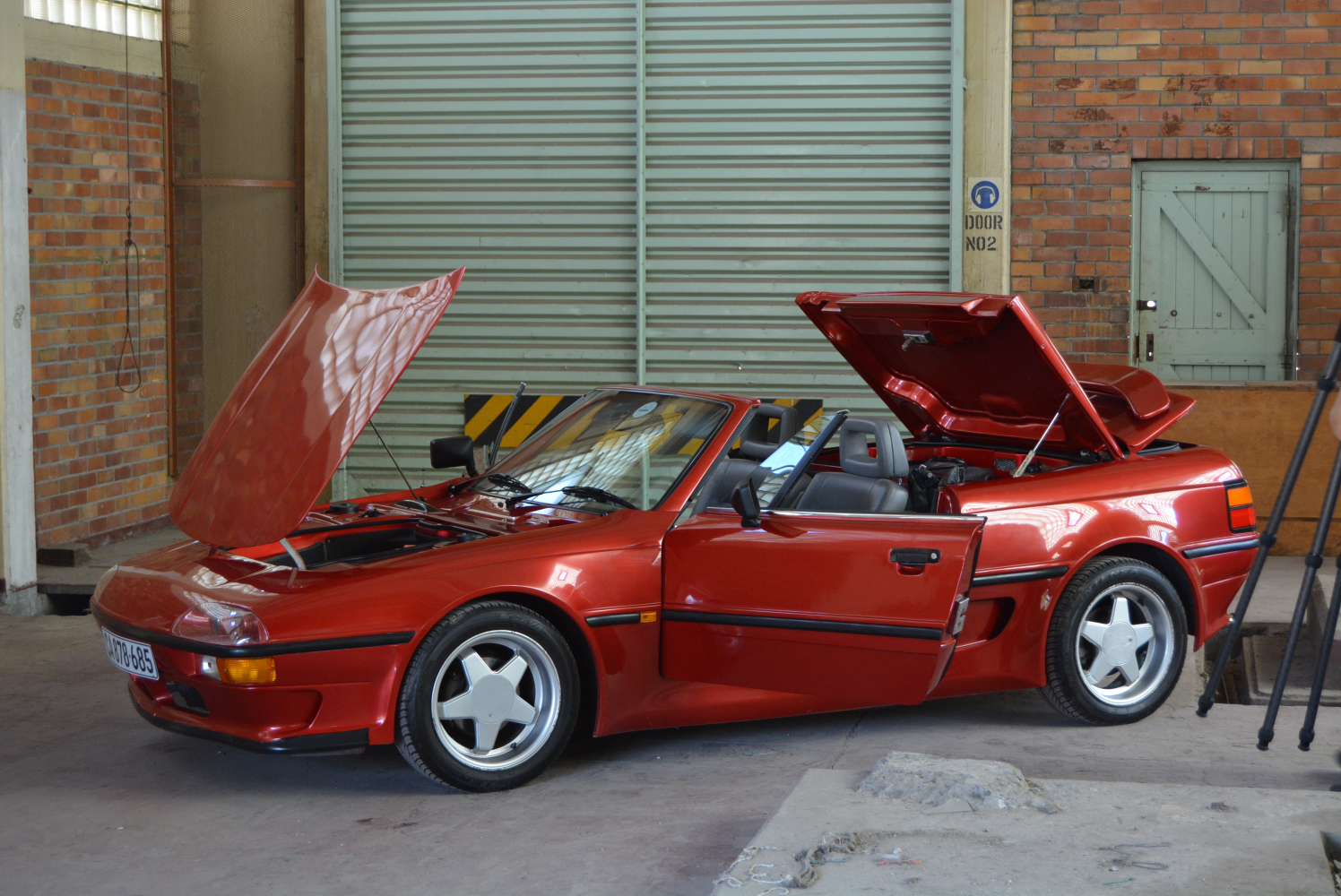
Four cars were built during 1989/90. The first, with a Ford Escort 1600 motor, is believed to be in PE but in need of repair, while the second Mk.1 version was destruction tested by VWSA. The first Mk.2 version was written off in an accident, and the fourth is this example, now part of the FMM collection. It was previously owned by Bernie Koch, who purchased the car in early 2014 from the estate of Billy Young who, in turn, had purchased the car from Steenkamp. First registered in 1996, it was – and still is – widely used as a show car. Koch refurbished the Caracal without affecting its originality, especially the distinctive body colour, and FMM has subsequently smartened-up the car, including replacing the windscreen.
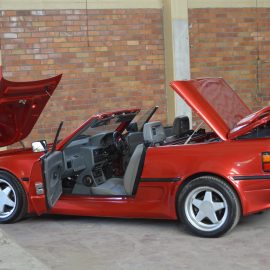
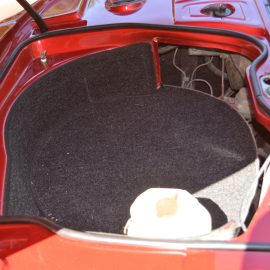
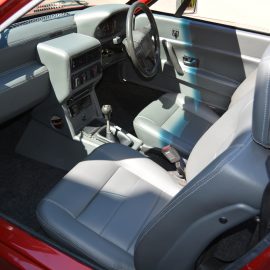
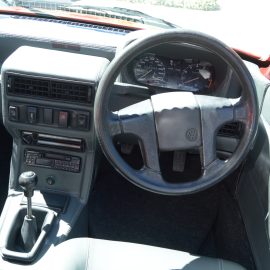
The car’s looks have not really dated. It is a car you get down into, not always easy due to the sharp rake of the windscreen. The cockpit is small and the seats are fixed, a combination that precluded my being able to drive the car safely – I’m simply too tall. So workshop technician Michael van Graan stepped in as chauffeur and a tour of the L’Ormarins Estate. Build integrity appears to be strong. Being in such close proximity to the motor provides an audible – but not too loud – soundtrack to progress. The low-slung nature of the car coupled with its Golf-inspired underpinnings certainly gives it the target sporty drive its creators envisaged. There is a small boot both front and rear but there is no roof or convertible top, so the Caracal needs to go into hibernation if the weather is bad…
It would not have taken much to turn Caracal into a pukka production vehicle, but at that time VW was launching the first Golf convertible so its fate was already sealed. Not a success but arguably not a failure. More a case of what might have been…