
29 Aug Doug and the LDS
Louis Douglas Serrurier (9 December 1920 – 4 June 2006) was a prominent South African racing driver and race car constructor. The last of the cars he built – LDS #10 – is a valued part of the FMM collection. Recently, Doug’s daughter Diane donated her father’s racing helmet, Springbok tie, medal and badges to the museum along with some other memorabilia. To honour this kind gesture, following is a story of talented engineer and driver Doug’s remarkable achievements…
South Africa has a long and proud motor sport history. Thanks to the efforts of local journalist Edward ‘Brud’ Bishop and the participation of renowned British drivers Richard ‘Dick’ Seaman and the Straight brothers, Whitney and Michael, the first South African Grand Prix held in East London in 1934 drew international attention to our shores. The success of the event led to more overseas participation during future summer months, but the country’s geographical location meant that the exposure to race car development that existed in Europe particularly was minimal to say the least. So it was left to local drivers to develop their own racing machinery – and there was certainly no shortage of engineering expertise and innovation within our borders, both pre- and, especially, post-war. One of the most successful of these ‘racing entrepreneurs’ was Louis Douglas Serrurier.
Doug began his motor racing career in 1936 at the age of 16 racing his motorcycle alongside his four brothers – and sister. After serving in the SAAF during WWII, he acquired a JAP speedway bike and began racing that before his girlfriend – and wife-to-be – Doreen ‘encouraged’ him to give up two-wheelers. So in the mid-1950s, Doug joined forces with Buddy Fuller and Dick Campbell to start stock car racing at Johannesburg’s Wembley oval – the company was called the Dunlop Helldrivers – competing with a fragile Hudson-based car. But in 1956 he also turned his attention to sports car racing with a Triumph TR2 before acquiring a 500cc Cooper-JAP single-seater. However, Doug’s engineering skills were itching to be put to good use, so he embarked on building a car of his own…
And so the Speedy Engineering Special was born. The car featured a tubular ladder-frame chassis with a wishbone front suspension and a De Dion rear end, and was powered by an 1 100 cc Coventry-Climax FWA engine with, initially, a Halibrand diff but later a VW unit. Doug raced it with some success before he went on a lengthy overseas trip following a payout after withdrawing from the Dunlop Helldrivers.
Doug returned to SA in 1958 with a Cooper T45 rolling chassis that he intended to race with an Alfa Romeo engine. He planned to sell the Speedy to raise the finances but there were no takers, so he sold the Cooper to fellow racer Syd van der Vyver. Undeterred, Doug fitted the engine from his Alfa Giulietta Spider (that he had bought while overseas) to the Speedy but, as luck would have it, he never raced it. Bruce Johnstone made an offer on the car, so the Alfa engine was removed and the Speedy Engineering Special moved to a new home.
Now chassis-less, Doug ordered another Cooper from the UK and, once at hand, began building a replica using a talent for which he was to be become renowned – an ability to spot weaknesses in an existing design and improving upon it. First, he changed the Cooper’s curved top chassis rail design for a simpler, straighter layout. But one of the significant changes incorporated into the ‘copy’ was to adopt coil spring shock absorber rear suspension (in place of the transverse spring set-up), a layout he had picked up from studying Jack Brabham’s works ‘lowline’ Cooper T53 at the 7th SA GP held in December 1960. The Cooper factory supported Doug’s efforts by providing some wheels and steering and suspension parts. Caldwell Panelbeaters was responsible for the aluminium bodywork.
Doug did not allocate chassis numbers per se, so to describe the LDS build story it simply needs to follow the build sequence. Ah, but that proves to be less than straightforward as Doug did build more than one chassis at any one time. The sequence given in Brian Tyler’s book The History of LDS in Formula One Racing, the article titled The LDS Racing Specials in the December 1994 issue of Classis Car Africa magazine by Peter du Toit and Jannie van Aswegen, and the generally authoritative Peter Mackintosh’s period race results clash over the build succession of the cars. Without prejudice, this article will follow the sequence given in the CCA article.
LDS#1 was built for Doug himself to race and was fitted with the 1,5-litre Alfa engine that was taken from the earlier T45. After crashing the car on its racing debut, the chassis was replaced and Doug had reasonable success with the car during 1961 before selling it to Sam Tingle at the end of the year. Despite LDS#1 having a new chassis the car is still regarded as being LDS#1.
Still in 1961, wealthy stockbroker George Mennie asked Doug to build a car using the engine, gearbox and wheels of his Cooper T45-Climax. Doug raced LDS#2 in November at the inaugural Kyalami race meeting before Mennie, who had retired from racing after the accident that damaged his Cooper, gave the car to Fanie Viljoen to campaign in 1962 and ’63. LDS#2 changed hands again in 1964 when Jackie Pretorius drove the car. After it was damaged in a crash, it was rebuilt using some remaining parts of the original LDS#1.
There is some uncertainty around the construction of the next in line, LDS#3, which was built for Errol Hammon and powered by a Ford engine. Hammon was a mid-field runner most of the time before selling the car to George van Straaten in August 1963. He raced it with similar results for a further year before the car was stripped of bodywork and the chassis adapted to create a sports car.
LDS#4 was commissioned by Arthur Pillman to build utilising a four-cam Porsche motor for John Love to race. At the end of 1961 after a practice crash in its first race, the car registered a DNS for three races before Love finished 9th in the first competitive outing in 1962. Love finished 1st and 2nd in the two heats in the next race in 1963 before going overseas to race, and was replaced by Dawie Gous for the rest of the year. The car did not appear in 1963 but reappeared the following year driven by Serrurier.
In late-1962, sports car racer Eugene Bosman asked Doug to build him a car, and so construction of LDS#5 began. Another chassis to be fitted with an Alfa engine, the driver-car combination proved to be reasonably competitive before the car was sold to Steve Mellet for the 1964 season. But a crash and resultant fire seriously damaged the car, and after being rebuilt and raced one more time, it was stripped and the chassis modified to form the basis of a sports car.
Back to 1962, Doug built a new chassis for himself – LDS#6 – to be fitted with an Alfa engine. It was commissioned by Jack Nucci, a wealthy Italian-born businessman who was already a sponsor of Fanie Viljoen and Peter de Klerk’s racing efforts. Doug successfully campaigned this car until mid-1964, when it was sold to Lionel Wilmot. However, some business ‘complications’ led to the car being sold to Leo van Popering at the end of the year.
In 1964, in a little over three years, the ever-industrious Doug had built six chassis and was busy with another – LDS#7. Again backed by the Otello Nucci team, the engine was an ex-works ex-Stirling Moss Climax FPF and the car was to be the last of the Cooper-based chassis design. Doug was a regular front-runner throughout a 15-race 1965 season before the car, eventually, was in the hands of the famous Domingo brothers.
A breakaway from the Cooper-inspired LDS chassis design occurred in 1965, by which time race car development had progressed and the cars were no longer as competitive. So, by means that are best described as vague, following the 1964 Rand Grand Prix, Doug managed to examine and measure the Willment Racing/Paul Hawkins Formula 2 Brabham BT10-Ford, from which LDS#8 was constructed for Jack Holme. However, some parts from Holme’s Lotus 18 were included in the build, so it was actually an LDS-Lotus-Brabham- Ford! Holme only raced the car four times before selling it to Clive Puzey for the 1967 season and onwards.
Typically, Doug was constructing LDS#9 at the same time as LDS#8, but with a 2-litre Climax FPF engine. Throughout 1966, Doug was again competitive, but at the end of the year he retired from single-seater racing. Thereafter, the car then changed hands several times.
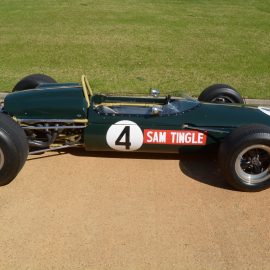
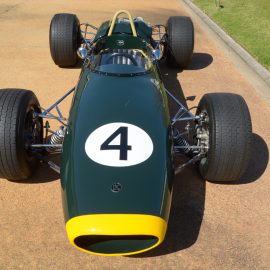
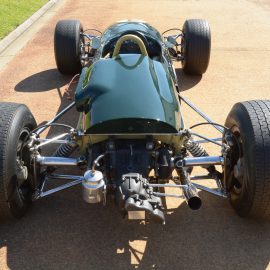
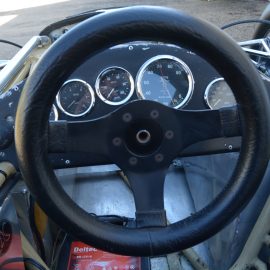
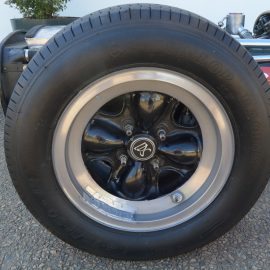
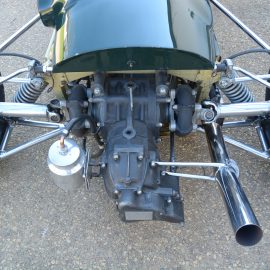
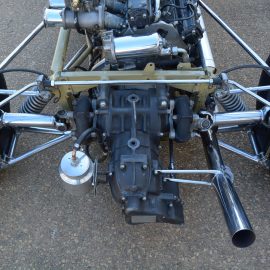
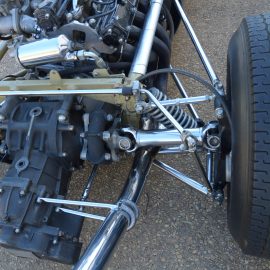
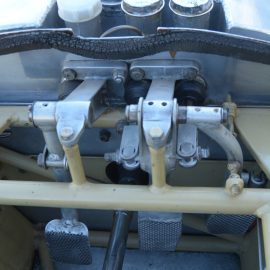
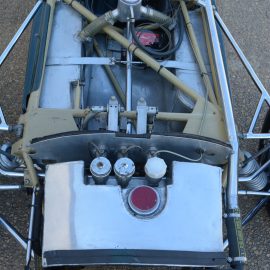
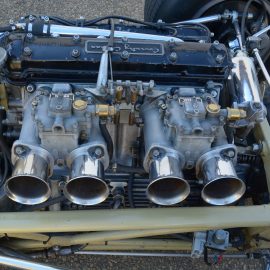
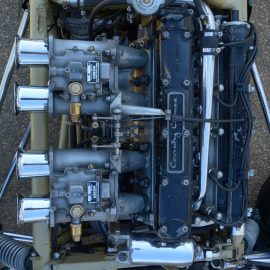
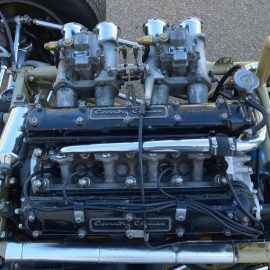
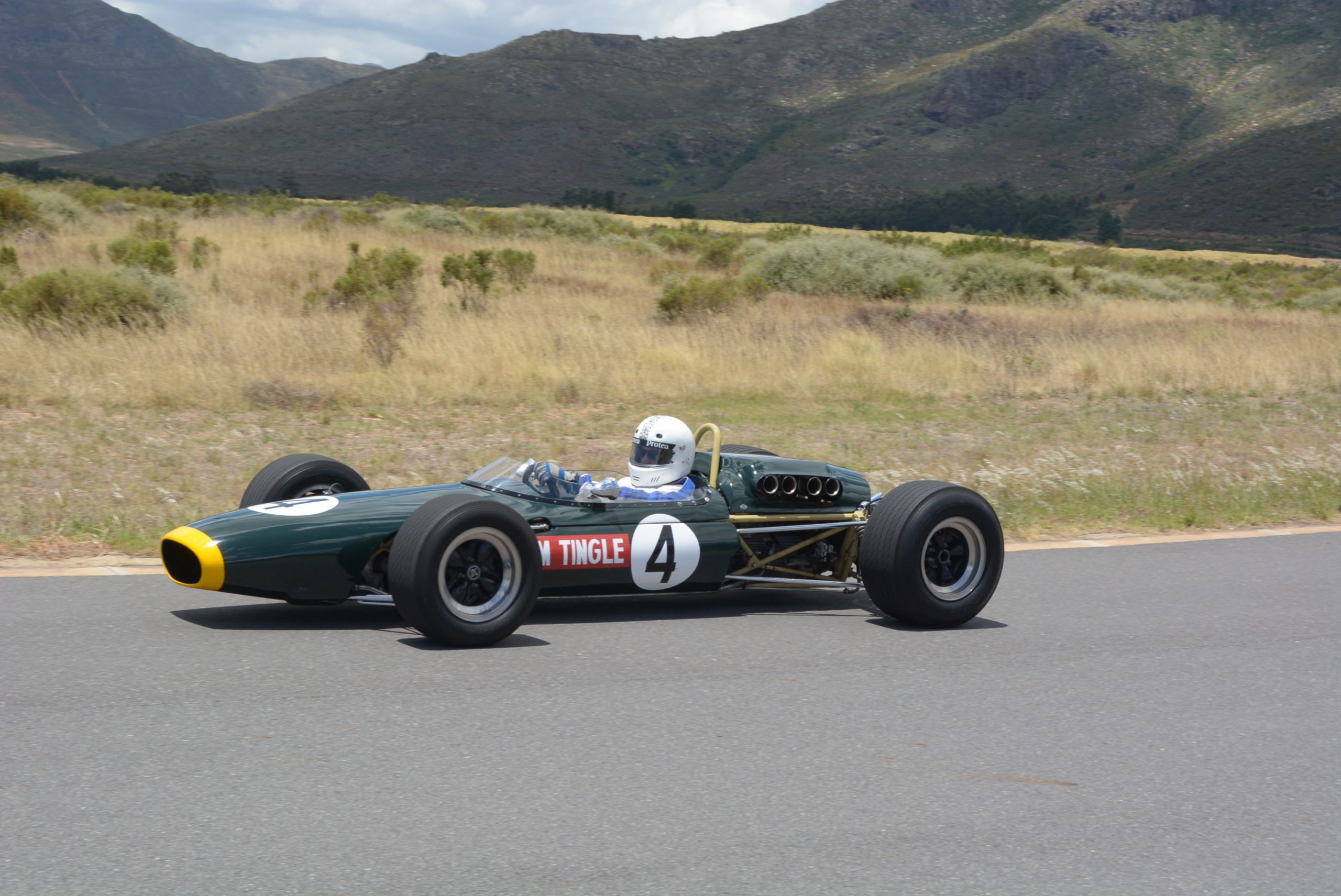
Finally to LDS#10, the car that is now proudly in the hands of the Franschhoek Motor Museum. Reportedly with some Brabham BT11 upgrades included in the construction but still boasting the Cooper-inspired suspension, in the hands of Sam Tingle, this car was to be one of the most successful of all the LDS machines. Powered by a Coventry-Climax 2,7-litre V8, after finishing 3rd and 7th in the last two races in 1965, Tingle finished in the top three in 12 of the 18 races in 1966, including outright victory in the second heat of the East London circuit’s Border 100 on July 11. It was much the same the following year: 11 podium finishes from 16 races including both heat wins at the Killarney National Trophy meeting on April 8. For the Rhodesian GP on December 3, the engine was replaced by a 3-litre Repco 620 V8. Tingle raced the car twice more in 1968, now with Team Gunston sponsorship, before the car was sold to Derek Henderson, who raced it three times before it was retired. Incidentally, Tingle’s nemesis at the time was John Love. Their rivalry is captured in Sam’s ‘motorsport scrapbook’ titled Love First, Tingle Second compiled by Greg Mills.
Tingle later repurchased the car, restored it to its original green-with-yellow noseband livery and re-fitted the Climax motor. The Repco was put in a glass display case and both the car and the Repco are what are on display at FMM.
Apart from building, servicing and repairing his LDS cars, Doug was a competitive driver who finished third in the SA Drivers’ Championship in 1960, ’62 and ’65, and took part in three SA Grands Prix. In December 1966, Doug opted out of single-seater racing to turn his attention to sports car racing. He raced and shared a Lola T70 V8, winning the 1966 Lourenço Marques 3-Hour and, with Jackie Pretorius, the 1967 Natal 3-Hour. Doug famously obtained Walls Ice Cream sponsorship, and the distinctive white-with-red-stripes livery was set off by a slogan on the back of the cars “Stop me and buy one”… Then with the emergence of Formula 5000 racing in SA, Doug prepared and ran a team of Lola T140s, with Pretorius and Paddy Driver amongst the driver line-up.
In 1969, Doug received the prestigious Ken Lee Award for his outstanding contribution to South African motorsport. He retired from motorsport in 1970 and, never to be idle, began producing replica Cobras and Ford GT40s.
Louis Douglas Serrurier passed away in 2006. He was a remarkable man, and the record of his cars and race results speaks volumes for his talents. Most of the LDS cars are still alive in the hands of various enthusiastic collectors and historic racers. The Franschhoek Motor Museum is honoured to have the last – and one of the most successful – of the LDS cars in its world-famous collection. LDS#10 is on permanent display in Hall D.